
Fuel loading at India's first prototype fast-breeder reactor in Kalpakkam is expected to start next week, marking a significant step in the country's nuclear program.

The US-China rapprochement, however tenuous, is not without implications for India. Both China and Pakistan have become closer to the US, notes Ambassador T P Sreenivasan.

Direct talks between the US and Iran, mediated by Pakistan, have failed to produce an agreement after 21 hours of negotiations, with disagreements over Iran's nuclear ambitions and sanctions proving insurmountable.

The US and Iran have agreed on a roadmap aimed at reaching a final agreement within 60 days after hours-long talks at the Swiss resort of Burgenstock, mediators Qatar and Pakistan said on Monday, describing the progress as "encouraging."

The power sector presents a puzzle. A fast-growing economy should be aligned to higher power demand but that hasn't been the case in the financial year 2026 till date (FY26TD).

As many as 35 vessels, including cargo carriers and oil tankers, successfully navigated through the strategic maritime chokepoint of the Strait of Hormuz over the last 24 hours, according to Iran's state media reports citing a formal declaration by the Islamic Revolutionary Guard Corps (IRGC) Navy.

The Appropriate Arrangement will allow Canadian companies to export nuclear material, equipment and technology for peaceful uses to India, in accordance with Canada's nuclear non-proliferation policy and under safeguards applied by the International Atomic Energy Agency.
The United States and Iran could resume negotiations as early as next week in Islamabad, according to a report by The Wall Street Journal citing people familiar with the matter.

Tensions escalate between Iran and the US over control of the Strait of Hormuz, a crucial shipping lane for global oil supplies, as both sides discuss extending a fragile ceasefire.

US President Donald Trump concluded his Beijing summit with Chinese President Xi Jinping, describing it as 'incredible' and highlighting 'fantastic trade deals' and a 'very strong' relationship between the two leaders.

Facing escalating threats from the US, Iran is mobilizing its citizens to form 'human chains' around power plants as a defensive measure against potential airstrikes, raising concerns about international law and civilian safety.

Iran has submitted its latest proposal aimed at advancing negotiations to end the ongoing West Asia conflict with the US, days after the Islamic Republic submitted a fresh proposal through regional intermediaries to cease its military operations in the Strait of Hormuz, which is likely to get rejected by Washington.

Trump further alleged that Iran was behind the attacks on three vessels carrying Indian seafarers near the Hormuz Strait, which resulted in the deaths of three, despite the US Central Command having confirmed that the strikes were carried out by American naval forces, calling the incident "totally unacceptable."

'In all these years of rupee depreciation, of rising oil prices, of inflation caused by import dependence, not one leader had the courage to look the people in the eye and say: Please do this for your country.'

US President Donald Trump on Tuesday claimed that Iran is in a "state of collapse" and has requested the United States to help "open" the Strait of Hormuz.

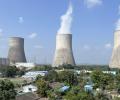
In a significant move, the United States on Wednesday removed restrictions on three Indian nuclear entities, over a week after National Security Advisor Jake Sullivan announced that Washington was finalising steps to 'remove' hurdles for civil nuclear partnership between Indian and American firms.

Iran blames the US for 'maximalism' and 'shifting goalposts' leading to the collapse of the Islamabad talks.

US President Donald Trump on Monday confirmed that his administration has received a proposal from Iran aimed at ending the ongoing conflict in West Asia, but described the offer as insufficient.
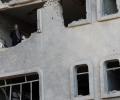
A spokesperson for the Central Khatam al-Anbiya Headquarters said that Iran's armed forces are prepared to intensify their response if aggression continues.

Pakistan's Defence Minister Khawaja Asif has indicated that further Iran-US negotiations are anticipated soon, following talks in Pakistan. Despite initial optimism, the previous round of negotiations did not result in a lasting peace agreement.

Israel's Defence Minister Israel Katz has stated that Israel is prepared to escalate military action against Iran, pending approval from the United States. This comes as US President Donald Trump says he would not use nuclear weapons in any conflict with Iran, while also claiming the US has 'total control' over the Strait of Hormuz.

The question is no longer whether the war will expand. It has. The next few days will tell us whether the war stabilises around Hormuz or whether the Strait itself becomes the trigger for a far larger rupture. What to watch for over the next 48 hours is simple: Any move by the US toward direct naval control of the Strait; any credible Iranian attempt to disrupt or mine shipping lanes and, critically, whether energy infrastructure in the Gulf continues to be targeted.If those lines are crossed in tandem, the war will no longer be containable within the region.
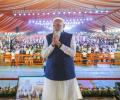
This is the time for India to plan forward fully, with the goal of Atmanirbharata, and energy security. The Persian Gulf is no longer a reliable source, points out Rajeev Srinivasan.

US Secretary of State Marco Rubio said that discussions aimed at halting the conflict with Iran have shown "some slight progress," while simultaneously echoing Washington's dissatisfaction with its NATO allies.
US Vice President JD Vance is set to arrive in Islamabad on Monday evening to lead a high-level American delegation in a second round of ceasefire negotiations with Iran, CNN reported, citing White House on Sunday.

Ahead of the expiry on Tuesday of the two-week ceasefire declared by US President Donald Trump in the conflict with Iran, US media outlets reported on Sunday that negotiators Steve Witkoff, special envoy for peace missions and Jared Kushner will head to Islamabad for talks with Iran.

A Pakistani delegation, led by Army Chief Field Marshal Asim Munir, has arrived in Tehran to mediate the ongoing conflict between the US and Iran, following initial talks in Islamabad.

The embassy also said that the exit must be undertaken in coordination with the mission.

Donald Trump has expressed confidence that Tehran will engage in diplomatic talks, warning that the country will 'see problems' should it refuse to cooperate.

Donald Trump claims a senior defence official urged military action against Iran, revealing escalating tensions and ongoing negotiations in the Middle East.

US President Donald Trump and Chinese President Xi Jinping met in Beijing to discuss a range of issues, including trade frictions and the war in Iran.

Through his commitment to democratic norms, debate, dissent and constitutionalism, Jawaharlal Nehru helped ensure that parliamentary democracy took deep root in independent India. Utkarsh Mishra evaluates Nehru's 17 years as India's first prime minister, examining his role in nation-building, democratic institution-building, economic planning, scientific advancement and foreign policy.

US-Iran talks in Islamabad collapsed after 21 hours, exposing deep divisions over nuclear ambitions and sanctions.

A fire erupted in Russia's Kursk Nuclear Power Plant on Sunday after Ukraine launched a drone attack at one of Russia's biggest nuclear power plants, damaging a transformer and causing a fall in the output of one of its reactors by 50 per cent, Anadolu Agency reported, citing the plant's press service.

As the security situation continues to evolve in West Asia and the Gulf region, an Iranian military source has warned the United States against any ground aggression on Iran, calling it a red line and saying a 'surprise' would await US President Donald Trump, Tasnim News Agency reported on Saturday.
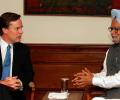
The India-US nuclear deal was aimed at ending India's nuclear isolation and nuclear apartheid, recalls Rup Narayan Das.

Sustaining 8 per cent-plus growth rates is necessary if we are to reach high-income status by 2047, points out Amitabh Kant.

US President Donald Trump on Sunday announced that the American Navy will henceforth block all maritime traffic entering the Strait of Hormuz.

The winter session of Parliament is set to begin with the government prioritizing its reforms agenda, including a bill to open the civil nuclear sector to private players. The opposition is expected to raise concerns about electoral roll revisions and air pollution.
